
Your Competitors May Be Paying Zero Duties on the Same Goods You're Importing. How Foreign Trade Zones (FTZs) Can Help You Reduce or Eliminate Customs Duties.
If your business imports foreign goods into the United States, there is a strong chance you are paying customs duties you are not legally required to pay. Not because of a filing error. Not because of a loophole. But because your competitors may be operating inside a Foreign Trade Zone ("FTZ"), and you are not.
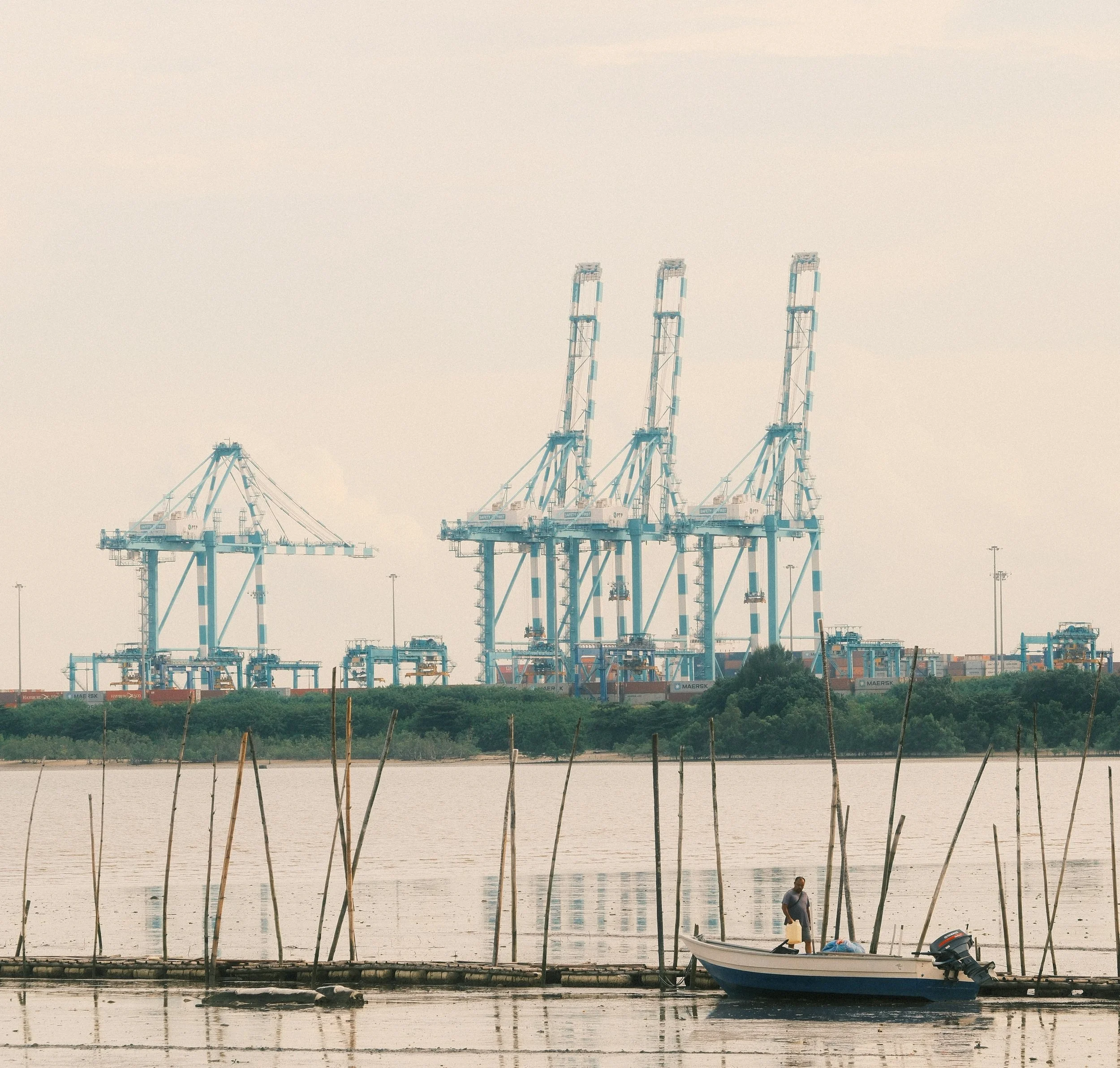
FTZs are one of the most financially significant and consistently underutilized tools in U.S. international trade law. For importers, manufacturers, distributors, and re-exporters, they can mean the difference between paying full customs duties on every shipment and paying nothing at all, or paying duties only when, and if, goods are actually sold into the U.S. market.
In this article, we explain what an FTZ is, who it applies to, the financial benefits it unlocks, how these zones are distributed across the country, and what businesses in South Florida — particularly those operating in and around Broward County — need to know. If you work with businesses that import goods or manufacture products using foreign-origin components, this article is also for you.
Picture This: Two Competing Importers. One Pays Duties. One Doesn't.
Two businesses import the same industrial machinery components from overseas. Both are based in South Florida. Both clear the same port. The first pays customs duties immediately upon arrival, before the goods are sold, before revenue is recognized, and regardless of whether inventory moves this month or next year.
The second admits those same components into an FTZ. It pays nothing on arrival. It pays duties only when goods leave the zone and enter commerce, and if those goods are ultimately re-exported, it pays nothing at all.
These are not hypotheticals. It is the operational reality for thousands of U.S. companies that have taken the steps to participate in the FTZ program, and a missed opportunity for thousands more that have not.
What Is a Foreign Trade Zone?
A Foreign Trade Zone is a designated, secure area located in or near a U.S. Customs and Border Protection (“CBP”) port of entry that is legally considered to be outside the customs territory of the United States for tariff and entry purposes. While physically located within U.S. borders, merchandise admitted into an FTZ is treated, for purposes of customs duties and federal excise taxes, as though it has not yet formally entered U.S. commerce.
The authority to establish and operate FTZs derives from the Foreign-Trade Zones Act of 1934. The program is governed by two sets of federal regulations: the FTZ Regulations and CBP Regulations, and they are administered by the Foreign-Trade Zones Board (“FTZ Board”), chaired by the Secretary of Commerce. Day-to-day oversight rests with CBP, which controls all admissions, withdrawals, and compliance activity within approved zones.
Inside an FTZ, goods may be stored, exhibited, assembled, manufactured, processed, relabeled, repackaged, repaired, tested, destroyed, or re-exported, without triggering the usual formal entry procedures or immediate duty obligations. The duty clock does not start until goods leave the zone for U.S. consumption. In many cases, it never starts at all.
Who Is the FTZ Program Designed For?
FTZs are not exclusively for Fortune 500 importers or high-volume shippers. The program is designed to serve businesses of all sizes across a wide range of industries. You may be a strong candidate for FTZ participation if your business:
Imports foreign goods and pays customs duties before those goods are sold or used;
Manufactures products using foreign-origin components or raw materials;
Distributes goods domestically and internationally from a U.S.-based facility;
Re-exports merchandise that enters the U.S. but is ultimately destined for foreign markets;
Stores inventory that is subject to import quotas or fluctuating tariff rates; or,
Manages high inventory volumes and carries the cash flow burden of upfront duty payments
Smaller businesses are not excluded. Under the Alternative Site Framework (“ASF”), a company can obtain FTZ designation for its own specific facility, sometimes within as little as thirty (30) days, without the lengthy traditional application process that once made participation impractical for smaller operators.
Accountants, freight forwarders, customs brokers, logistics consultants, and financial advisors who work with import-dependent businesses should be aware that FTZ eligibility is broader than most clients realize, and that identifying this opportunity for a client is the kind of guidance that defines a trusted advisory relationship.
There are a series of financial benefits to operating within the FTZ. These benefits include:
1.Duty Deferral. Pay Later, Not Now.
Goods admitted into an FTZ are not subject to formal CBP entry procedures, and duty payment is deferred until the merchandise is withdrawn from the zone for U.S. consumption. For businesses managing large inventory volumes, this deferral is effectively an interest-free line of credit on the full value of duties owed. Money that stays in your business rather than flowing immediately to the government upon importation.
2.Duty Elimination on Re-Exported Goods
Merchandise admitted into an FTZ and subsequently re-exported, without ever entering U.S. commerce, is generally not subject to U.S. customs duties at all. If your business uses the U.S. as a distribution hub serving international markets, this benefit alone can justify participation.
3.Duty Elimination on Waste, Scrap, and Destroyed Merchandise.
No duty is owed on goods that are scrapped, lost, or destroyed under CBP supervision while inside an FTZ. You do not pay for what never reaches the market.
4.Inverted Tariff Relief. Pay the Lower Rate.
For businesses with FTZ manufacturing authority, the inverted tariff benefit can be transformative. Where the duty rate on a finished product is lower than the rate on its foreign-origin components, a manufacturer inside an FTZ may elect to pay duties at the lower finished-product rate rather than the higher component rate. This benefit is widely used in automotive, aerospace, pharmaceutical, electronics, textile, petroleum, and machinery manufacturing, industries where component duty rates routinely exceed finished-product rates.
5. Weekly Entry Consolidation — Fewer Filings, Lower Fees
Rather than filing a separate customs entry, and paying a separate Merchandise Processing Fee (“MPF”), for each individual shipment, FTZ operators may consolidate all withdrawals into a single weekly entry. For companies receiving multiple shipments per week, the administrative and fee savings compound significantly over time.
6. Quota Management
Goods subject to an import quota may be placed into an FTZ and held until the quota period opens or restrictions are lifted, since zones are considered outside U.S. customs territory for entry purposes. This allows businesses to maintain inventory continuity and planning flexibility without sacrificing compliance.
FTZs Are Located Across the Country
FTZs are not a regional program. They exist in every U.S. state and Puerto Rico. As of 2025, there are:
more than 260 approved FTZ projects across the country;
approximately 1,300 active operations collectively;
employing over 500,000 American workers; and,
handling more than $1.1 trillion in total merchandise received and exported annually.
Every CBP port of entry is entitled to have at least one zone, and under the ASF, zone designation can be extended to eligible facilities located within 60 miles or 90 minutes driving time of a port, meaning that for most businesses located near a major port, airport, or inland distribution hub, access to FTZ benefits is within reach.
Zone grantees, which include the state or local governments, port authorities, and economic development organizations authorized to administer FTZs, are required by statute to operate zones as a public utility, providing equal access to all eligible users on fair terms. This is not a program reserved for well-connected industry players. It is a federal program designed, as a matter of law, to be available to any qualifying business.
Miami-Dade County Sits at the Center of Global Trade. Is Your Business Using FTZ No. 281?
For businesses operating in South Florida, Foreign Trade Zone. 281 (“FTZ No. 281”), associated with PortMiami, is one of the region’s most significant internationa trade and customs resources. Strategically positioned near one of the nation’s busiest seaports and cargo hubs, FTZ No. 281 provides businesses with direct access to international shipping lanes, Miami International Airport, major highway infrastructure, and critical trade routes connecting the United States to Latin America, the Caribbean, Europe, and beyond.
Industries commonly operating within the South Florida FTZ environment include:
electronics and technology products;
pharmaceuticals and medical supplies;
apparel and consumer goods; and,
industrial and commercial equipment.
For companies importing merchandise into the United States, the issue is often not whether an FTZ program could benefit operations, but whether the business has fully evaluated the customs, duty, and logistical advantages available through FTZ participation.
Participation in an FTZ program also carries significant compliance responsibilities. Businesses operating within FTZ No. 281 must maintain CBP-approved inventory and recordkeeping systems, accurately track merchandise movements, and comply with customs reporting and audit requirements.
Certain manufacturing or production activities require FTZ Board authorization, and compliance failures may expose operators to penalties, duty liability, suspension of FTZ privileges, and increased regulatory scrutiny.
Broward County Has One of the Best FTZs in the Nation. Are You Using It?
For businesses in South Florida, Foreign Trade Zone No. 25 (“FTZ No. 25”), sponsored by Broward County and administered by Port Everglades, is the region's most powerful trade compliance resource, the first FTZ established in Florida, and one that consistently ranks among the top ten in the nation for export activity according to the U.S. Foreign-Trade Zones Board's Annual Report to Congress.
With direct access to a deepwater seaport, Fort Lauderdale-Hollywood International Airport, major highway infrastructure, and direct rail connections, FTZ No. 25 is particularly well-positioned for businesses trading across the Caribbean, Central and South America, and Europe. Its leading commodities include:
petroleum products;
machinery; and,
mechanical appliances.
This reflects the diversity of industries that have already recognized the opportunity. If your business is located in Broward County and imports goods, the question is not whether FTZ No. 25 is relevant to you, it is how much you have been leaving on the table by not participating.
Participating in an FTZ program is not simply a matter of moving goods into a designated area. Zone operators must maintain CBP-approved inventory control systems, document all admissions and withdrawals on the appropriate CBP forms, satisfy recordkeeping requirements, and be prepared for compliance reviews, spot audits, and enforcement inquiries.
Production activity requires specific FTZ Board authorization. Procedural failures, even unintentional ones, can result in monetary penalties of up to double the loss of lawful duties, revocation of zone status, and exposure to unpaid duties that eliminate the financial benefits the program was meant to provide.
The Question Is Not Whether You Qualify. It's How Much You've Already Overpaid.
The businesses that benefit most from FTZ participation are those that enter the program with a clear legal strategy, well-documented compliance procedures, and experienced counsel in their corner when CBP comes knocking.
If your business imports goods, manufactures products using foreign components, or distributes merchandise internationally, there is a meaningful probability that the FTZ program applies to you, and that you have been absorbing duty costs that a competitor with proper legal guidance has already eliminated.
At Imperial Shield PLLC, we help businesses evaluate FTZ eligibility, understand the full scope of available benefits, build the compliance infrastructure required to operate within the program, and respond to CBP enforcement matters when they arise. Whether you are exploring FTZ participation for the first time, dealing with a compliance inquiry, or managing a broader trade enforcement issue, we are here to protect your operations, your assets, and your bottom line.
If your business is currently paying customs duties on imported goods, contact us today for a consultation. The cost of not acting may already be showing up in your financials
-
An FTZ is a secure area in or near a U.S. port of entry where imported goods can be stored, processed, or manufactured without immediate payment of customs duties.
-
FTZs can reduce costs through duty deferral, duty elimination on re-exports, inverted tariff savings, and lower Merchandise Processing Fees (MPFs).
-
Importers, manufacturers, distributors, and exporters of all sizes may qualify, including small and mid-sized businesses.
-
Yes. Under the Alternative Site Framework (ASF), many smaller businesses can obtain FTZ designation for their own facilities.
-
No. Businesses can operate in an existing FTZ or apply to designate their own facility.
-
Generally, no. Goods re-exported from an FTZ without entering U.S. commerce are usually not subject to U.S. customs duties.
-
It allows certain manufacturers to pay duty at the lower rate applicable to the finished product rather than the higher rate on imported components.
-
Yes. FTZ operators must maintain CBP-compliant inventory systems, records, and procedures.
-
Some FTZ site approvals under the ASF can be obtained in as little as 30 days, depending on the circumstances.
-
Legal guidance can help businesses evaluate eligibility, structure compliance procedures, and avoid costly mistakes.
This article is intended for informational purposes only and does not constitute legal advice. The content herein is not a substitute for obtaining legal advice from a qualified attorney licensed in the appropriate jurisdiction. Viewing or relying upon this information does not create an attorney-client relationship. Readers should consult with legal counsel regarding their individual circumstances before taking any action based on this material.
