
Exporting From the U.S. to South America: What Businesses and Individuals Need to Know Before the Shipment Leaves
You have a buyer in Colombia. A distributor in Ecuador. A business partner in Brazil or Chile. The product is ready to ship and the is deal ready to close. Exporting from the United States (“U.S.”)to South America is a significant commercial opportunity, and for many U.S. businesses, South America is one of their most important markets.
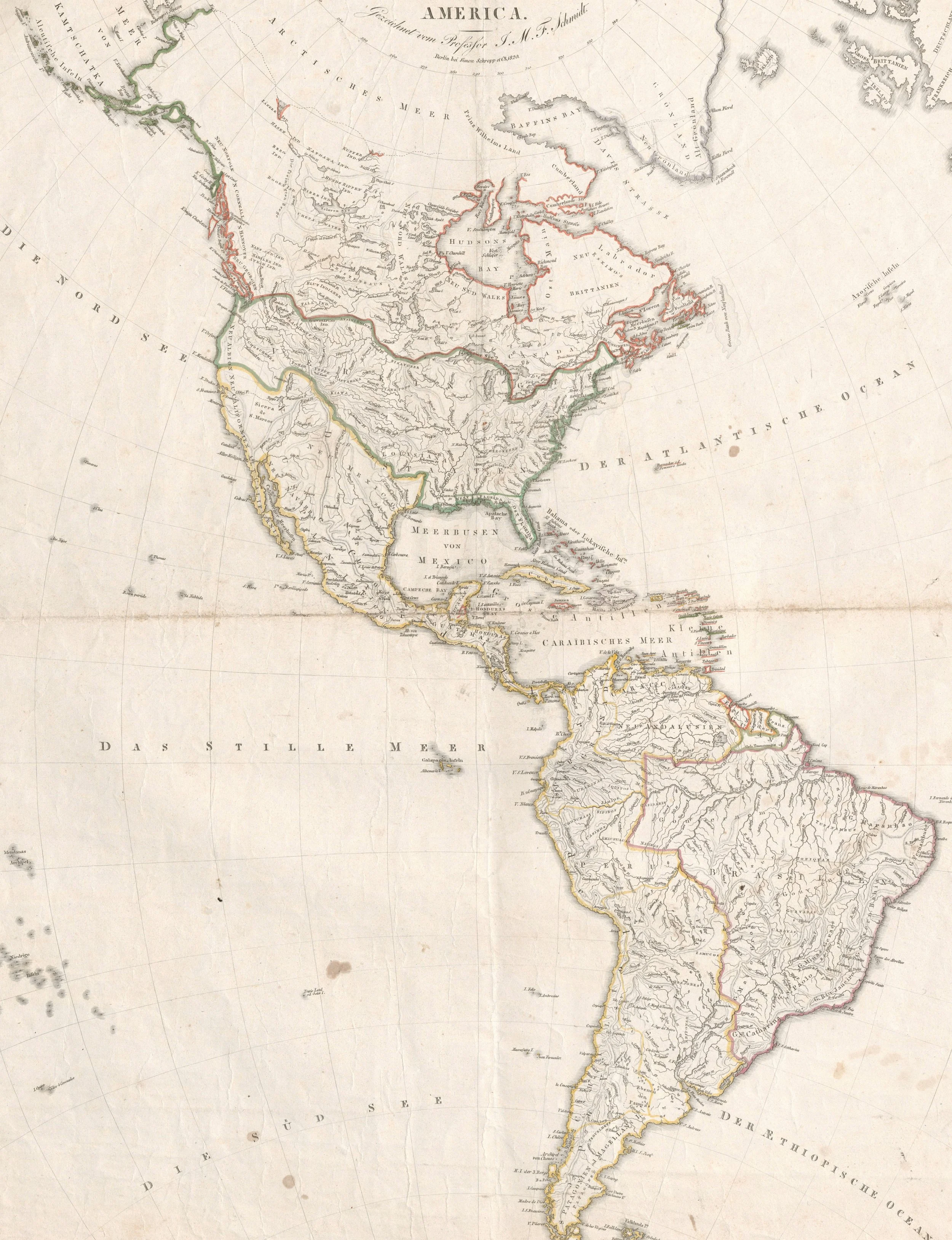
But before that shipment leaves, you may have to deal with several different U.S. legal requirements. What applies can depend on the product, where it is going, who is receiving it, how it will be used, and how the transaction is structured.
Many exporters do not realize this until a problem has already surfaced. Shipping goods from the U.S. to South America is not simply a matter of arranging transportation and completing shipping documents. Depending on what you are exporting, the same shipment can raise very different legal issues depending on what you are exporting, where it is going, who will receive it, and what that person or company intends to do with it.
And getting it wrong can mean much more than a paperwork problem. They include substantial civil penalties, criminal liability in appropriate circumstances, seizure and forfeiture of goods or other property where authorized by law, and in serious cases, the loss of the right to participate in U.S. export transactions at all.
This article explains where exporters can run into trouble and why the decisions made before a shipment leaves can matter so much if the government later questions the transaction.
Why South America Exports Deserve Careful Attention.
The United States is one of South America's largest trading partner.
For a U.S. company doing business in South America, however, the important question is not simply how much trade moves through the region. It is whether the laws that govern your particular transaction have been properly addressed.
The important point for an exporter is that more than one federal agency may have a role in the same transaction. The Bureau of Industry and Security (“BIS”) administers and enforces the Export Administration Regulations (“EAR”); the Directorate of Defense Trade Controls (“DDTC”) administers the International Traffic in Arms Regulations (“ITAR”); the Office of Foreign Assets Control (“OFAC”) administers U.S. economic sanctions programs; and the U.S. Customs and Border Protection (“CBP”) enforces numerous customs and border-related laws and regulations. The applicable requirements depend upon the particular transaction.
The risks are not the same in every South American country. A transaction may require closer attention because of the applicable sanctions rules, concerns about diversion or transshipment, the goods involved, or the people and companies on the other side of the deal.
The destination matters, but it is only part of the picture. You cannot reliably determine your obligations simply by looking at the country named on the shipping documents. That is where legal judgment becomes important.
The Products That Move and the Ones That May Require Additional Analysis.
U.S. companies ship all kinds of products to South America. Those exports include petroleum and energy products, machinery, electronics, chemicals, pharmaceuticals, aerospace components, vehicles, agricultural products, and plastics.
Not all of these categories carry the same compliance risk. And the fact that a product falls within one of these categories does not, by itself, establish that an export license is required.
Certain products, particularly those involving advanced electronics, telecommunications, aerospace, defense, software, technology, chemicals, or specialized industrial equipment, may require closer legal review. The applicable requirements can depend upon the item’s classification, technical characteristics, destination, end user, end use, and other facts surrounding the transaction.
This is where exporters often get into trouble. A product can look completely ordinary to the seller and still be subject to export controls, while another product in the same general category may not require a license at all. Determining which situation applies is a transaction-specific legal question.
More Than One Set of U.S. Rules May Apply.
There is no single set of U.S. rules that answers every export question. Depending on the circumstances, the same export may involve rules administered by BIS, DDTC, OFAC, and CBP, or more than one of them, each with its own requirements, its own enforcement authority, and its own penalty structure.
The Export Administration Regulations govern items subject to BIS jurisdiction, including many commercial and dual-use products.
The International Traffic in Arms Regulations govern defense articles and defense services.
OFAC administers U.S. economic sanctions programs, which can restrict transactions involving particular countries, persons, entities, or types of conduct.
CBP enforces customs laws that apply to the physical movement of goods across the U.S. border.
This is where things become complicated for an exporter. One agency’s rules do not necessarily answer another agency’s questions. Compliance with one does not establish compliance with another. A product that does not require an export license under the EAR may still present an OFAC sanctions problem. A transaction that raises no OFAC issue may still require a State Department authorization under the ITAR. And even when the export-control requirements have been addressed, documentation or customs issues can still delay a shipment.
Managing these issues is not something that should begin at the shipping dock. It begin before the deal is finalized, and it requires legal analysis, not just logistics coordination.
The difficult question is often not whether export regulations exist. It is how those regulations apply to the particular transaction in front of the exporter.
Where Exporters Actually Run Into Trouble.
Most exporters are not trying to violate U.S. law. Problems arise when a company assumes a product does not require a license, does not identify an issue with a customer or intermediary, relies entirely on a freight forwarder’s paperwork, or continues with a transaction even though something about the deal does not look right.
The problems can take different forms. A shipment may leave without a required authorization. A customer or intermediary may turn out to present a sanctions concern. Goods may be routed through an intermediary and ultimately sent somewhere the exporter did not expect. Sometimes the problem is simply that facts surrounding the buyer, payment, or shipping route were not properly examined.
BIS guidance specifically identifies a number of potential red flags involving freight forwarders, exporters, ultimate consignees, transaction structures, destinations, and parties to the transaction.
From inside the company, the transaction may look routine, but from the government’s perspective, the same facts may raise very different questions. What appears to be a routine commercial transaction from the exporter's perspective may look like a sanctions evasion scheme or an unlicensed export from BIS or OFAC’s perspective. That different in perspective is one reason legal review matters before the shipment leaves.
As discussed in the firm's prior article on transshipment enforcement, transshipment and diversion concerns can create significant compliance issues when goods are routed through intermediaries or destinations in circumstances suggesting that the stated transaction does not reflect the goods’ ultimate destination or end use. And as discussed in the firm's prior article on OFAC's 50% Rule, sanctions exposure in South American transactions can arise through ownership structures and intermediary relationships that are not visible on the surface of the transaction. OFAC also cautions that parties should conduct appropriate due diligence concerning entities involved in transactions and their ownership interests.
What Can Happen When an Export Goes Wrong.
The financial and operational consequences of an export violation involving South American transactions can be severe, and they can escalate quickly from a civil matter into something far more serious.
BIS can impose substantial civil penalties for violations of the EAR. As of January 15, 2025, the maximum administrative monetary penalty is $374, 474 per violation or twice the value of the transaction, whichever is greater, subject to annual inflation adjustments. BIS violations may also result in denial of export privileges, which can prohibit a person from participating in transactions subject to the EAR. Criminal penalties may also apply in appropriate cases.
DDTC civil penalties for ITAR violations can also be substantial, and the ITAR provides for administrative and criminal consequences in appropriate circumstances. Companies involved in defense-related exports may additionally face suspension or debarment consequences affecting their ability to participate in defense trade.
OFAC penalties can also be substantial, and the applicable amount depends on the sanctions program, statutory authority, and circumstances of the apparent violation.
Beyond the penalties themselves, export enforcement actions may also involve the seizure and forfeiture of goods, proceeds, and related assets where authorized by applicable law. As discussed in the firm's prior articles on CBP seizure notices and civil asset forfeiture, the government seizure or forfeiture proceedings can create separate and time-sensitive legal issues that should be addressed promptly.
The Voluntary Disclosure Question.
When an exporter discovers a potential violation before BIS, DDTC, or OFAC has initiated an investigation, voluntary self-disclosure is an option that deserves serious consideration. Each agency maintains a VSD program that may result in meaningfully reducing penalties when a disclosure is properly handled.
The decision is more complicated than simply submitting a disclosure after discovering a possible violation.
A voluntary self-disclosure is not simply a form that can be submitted immediately after potential violation is discovered. Before making that decision, counsel may need to understand what happened, preserve relevant records, determine which agency has jurisdiction, and assess the scope of the problem. Only then can the company make an informed decision about whether disclosure is appropriate and how to proceed.
The applicable agency’s requirements also matter. BIS’s current guidance distinguishes between certain disclosures involving aggravating factors and those that do not. For VSDs involving aggravating factors, BIS recommends a thorough review of suspected violations that may extend up to five years before the initial notification.
OFAC likewise treats voluntary self-disclosures as a mitigating factor, but expressly states that self-disclosure does not constitute “amnesty.” OFAC expects a disclosure to provide sufficient detail to give the agency a complete understanding of the apparent violation’s circumstances.
Accordingly, the decision of when to disclose, the agency or agencies to which disclosure may be appropriate, the scope of any investigation, and the content and timing of the disclosure should be evaluated with experienced counsel.
Why It Helps to Have Counsel Involved Before You Ship.
Export compliance for South American transactions can involve several federal agencies, different sets of rules, and risks that may not be obvious from the face of the transaction.
Your freight forwarder is an important participant in the export process, but using a freight forwarder does not, by itself, transfer the exporter’s compliance obligations or eliminate the need for legal analysis. Freight forwarders play a critical role in the physical execution and documentation of export transactions, but the respective responsibilities of the exporter, foreign principal party in interest, authorized agent, and freight forwarder depend upon the structure of the transaction.
BIS expressly recognizes different responsibilities for non-routed and router export transactions. In certain routed transactions, for example, the foreign principal party in interest may expressly assume responsibility for determining licensing requirements, and an authorized U.S. agent may become the “exporter” for purposes of the EAR.
A product’s commercial appearance is not enough to determine whether U.S. export controls apply. At the same time, a product in a sensitive category does not automatically require a license. The answer depends on the particular product and transaction.
Export-control issues can also arise even when no shipment crosses the border. As discussed in the firm's prior article on deemed exports, providing a foreign national with access to controlled technology in the United States can, in certain circumstances, constitute a deemed export. In other words, export-control questions are not always about a box leaving the country.
If you are preparing to ship to South America, entering a new market, adding a foreign distributor, or simply have questions about whether a transaction can proceed as planned, we can help assess a proposed transaction before it moves. Contact us today for a confidential consultation.
-
It depends on the product, the destination, the end user, the end use and other facts surrounding the transaction. If there is uncertainty, the better time to resolve it is before the shipment leaves.
-
Potentially, yes. Calling a product “commercial” does not determine whether U.S. export controls apply. The answer depends on the particular product and transaction. If there is uncertainty, a transaction-specific legal review can help determine what rules apply before the product is shipped.
-
Yes. Looking only at the name of your buyer may not be enough. Ownership, intermediaries, and other parties involved in the transaction can raise separate sanctions questions.
-
It depends. Using a freight forwarder does not automatically transfer your export-compliance responsibilities. The exact allocation of responsibilities can depend on the structure of the transaction, including whether it is a router transaction.
-
A lack of intent does not necessarily eliminate civil exposure. If you discover that a shipment may have violated U.S. export requirements, do not assume the problem will resolve itself. Preserve the relevant records and speak with counsel before deciding how to investigate or respond.
-
It depends. The applicable retention period depends on the regulatory regime and the records involved. Exporters should maintain records such as shipping documents, export filings, licenses, and other materials relating to the transaction for at least seven years as a conservative practice.
-
A VSD is the process for reporting an apparent violation to the appropriate government agency. But whether your company should make a disclosure is a legal and strategic question, not simply an administrative one.
-
Yes. Depending on the governing law and the circumstances, certain export-control and sanctions violations can result in criminal prosecution, including substantial fines and imprisonment. Criminal exposure is highly fact-dependent.
-
Potentially. Depending on the circumstances and the legal authority involved, the government may seize goods, funds, or other property. Because seizure and forfeiture proceedings can involve strict deadlines, prompt legal advice is important when property has been seized or detained.
-
Before a problem becomes an enforcement action. If you are entering a South American market, changing your products or distributors, uncertain about a transaction, or dealing with a stopped shipment, legal advice can help you understand your options before the situation becomes more difficult.
This article is intended for informational purposes only and does not constitute legal advice. The content herein is not a substitute for obtaining legal advice from a qualified attorney licensed in the appropriate jurisdiction. Viewing or relying upon this information does not create an attorney-client relationship. Readers should consult with legal counsel regarding their individual circumstances before taking any action based on this material.
