
Importing Fish and Seafood Into the United States: U.S. Import Requirements, Detentions, and Enforcement Risks.
Seafood is one of the most closely scrutinized import categories in the United States, and not for the reason most importers assume.
It is not just about food safety, though that matters. It is not just about tariffs, though those matter too. It is that seafood sits at the intersection of food law, conservation law, trade law, and criminal enforcement in a way that almost no other commodity does. A single shipment of shrimp or tuna or grouper can simultaneously implicate the U.S. Food and Drug Administration (“FDA”), National Oceanic and Atmospheric Administration’s (“NOAA”) fisheries enforcement division, U.S. Customs and Border Protection (“CBP”), and in some cases the U.S. Fish and Wildlife Service, all reviewing the same boxes, all with their own standards, their own documentation requirements, and their own authority to stop the shipment cold.
Most importers do not realize that until a detention notice arrives.
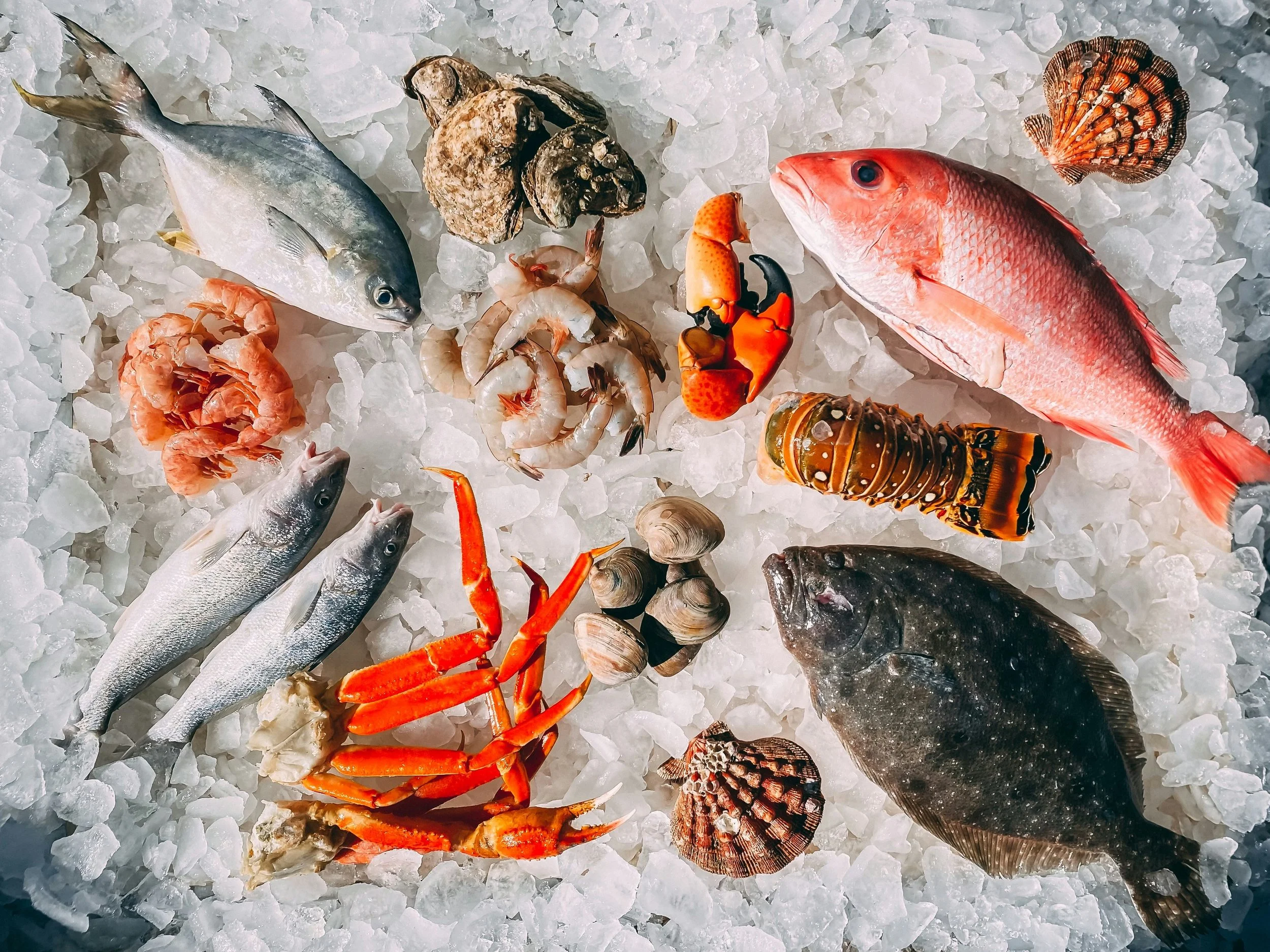
If you are in the business of importing fish, shrimp, crab, lobster, squid, tilapia, salmon, tuna, snapper, or any other seafood product, understanding what makes this space so legally complex, and why the decisions made in the first hours after a shipment is flagged can define the entire outcome, is not optional. It is the difference between a resolved situation and an enforcement matter that follows you for years.
And for importers who regularly bring seafood into the United States (“U.S.”), the question is not simply what to do after a shipment is stopped. The more important question is whether the import process is properly structured before a shipment ever reaches the border.
The Reason Seafood Gets So Much Attention at the Border
Seafood fraud is widespread and well-documented. Independent testing has repeatedly found that a significant percentage of seafood sold in the U.S. is not what the label says it is, the wrong species, the wrong origin, the wrong harvest method, or some combination of all three. That fraud does not always originate with the U.S. importer. It often starts somewhere in a supply chain that spans multiple countries, multiple handlers, and multiple sets of documentation before the product arrives at an American port.
But here is the legal reality that matters for importers: it does not matter where the problem started. For customs purposes, the importer of record bears significant responsibility for the accuracy and completeness of the entry and compliance with applicable import requirements, even when inaccurate information originated with a foreign supplier. That is the structure of U.S. import law, and it does not bend because a foreign supplier was the source of the misrepresentation.
Federal enforcement agencies know how complex seafood supply chains are. They also know that complexity has historically been used, intentionally and otherwise, to obscure mislabeling, evade conservation requirements, and avoid applicable duties. That history is precisely why seafood enforcement is as aggressive as it is.
When importers hear that seafood is regulated by multiple federal agencies, it can sound like bureaucratic overlap that a good customs broker can manage. That understanding is incomplete, and for importers who rely on it, it tends to be expensive.
The reality is that each agency reviewing a seafood shipment is applying a different legal standard, looking for different documentation, and operating under a different enforcement authority. Satisfying one does not satisfy the others. A shipment that clears CBP's tariff classification review can still be refused entry because of an FDA import alert on the foreign facility that processed it. A product with complete food safety documentation can still face NOAA enforcement because the harvest chain records required under the Seafood Import Monitoring Program (“SIMP”) are incomplete or inconsistent. A species that passes every food safety and customs check can still trigger legal exposure under the Lacey Act if the catch violated the laws of the country where it was taken.
These are not theoretical scenarios. They are the kinds of situations that reach our desk regularly, usually after an importer has already made the mistake of assuming that one agency's clearance meant the shipment was home free.
What makes this genuinely difficult, and what distinguishes seafood from most other import categories, is that the legal frameworks these agencies enforce are not designed to coordinate with each other from the importer's perspective. Each has its own timeline, its own request procedures, its own deadline structure. An importer managing responses to simultaneous inquiries from multiple agencies, without legal counsel who understands how those parallel processes interact, is in a very precarious position.
The Documentation Problem That Catches Even Experienced Importers
One of the most common triggers for seafood enforcement is documentation, not fraud, not bad intent, just documentation that is incomplete, inconsistent, or doesn't trace the product the way the applicable regulation requires.
SIMP applies to covered seafood species and requires importers to report specific harvest and chain-of-custody information at entry. Covered species include shrimp, tuna, grouper, snapper, swordfish, sea cucumber, abalone, and others. That information has to follow the product from the point of catch or harvest through every hand it passed through before arriving in the United States.
The problem is that supply chains for these species are often long, multi-country, and not designed with U.S. regulatory requirements in mind. A fishing vessel operating legally under its flag state's rules may not generate documentation in the format SIMP requires. A processor in Vietnam or Ecuador may not fully understand what an American importer needs from them. By the time the product arrives at a U.S. port, the documentation gaps are already baked in, and the importer is the one who has to answer for them.
What most importers do not appreciate is that incomplete SIMP documentation is not treated as a minor administrative issue. It can result in refusal of entry, seizure, and in cases where the agency believes the documentation gaps reflect deliberate omissions, civil penalty exposure. Getting the documentation right before the shipment moves is far less expensive than addressing a documentation problem after a detention notice has already been issued.
For that reason, seafood import compliance should not begin when a shipment is already sitting at a U.S. port. The legal risks are often easier to address before the shipment moves than after an agency has identified a problem.
Country of Origin and Seafood Imports
Where seafood was caught or farmed matters for several different legal purposes simultaneously, and the answer is not always as clear as the invoice makes it appear.
For tariff purposes, country of origin determines the applicable duty rate and whether antidumping or countervailing duty orders apply. Shrimp from certain countries, for example, has been subject to antidumping duty orders for years, with rates that add significant cost to the landed price. An importer who enters shrimp under an incorrect origin, even based on what their supplier represented, can face retroactive duty liability on that entry and potentially on prior entries from the same source.
For SIMP purposes, origin documentation has to be specific enough to trace the catch back to the vessel and fishing area. A vague geographic claim that satisfies a supplier's paperwork obligations may not satisfy NOAA's requirements.
And for Lacey Act purposes, which we address below, the country where the fish was caught matters because it determines which foreign laws govern the legality of the catch. That analysis requires a level of supplier due diligence that most importers have never considered necessary.
The Lacey Act and Seafood Import Enforcement
The Lacey Act is the part of seafood import law that tends to genuinely surprise people when they encounter it for the first time, usually in an enforcement context.
The statute prohibits importing fish and wildlife that was taken, possessed, transported, or sold in violation of any U.S. or foreign law. The foreign law part is where the complexity lives. If a supplier harvested fish in violation of that country's own fishing regulations, catch limits, protected areas, seasonal restrictions, licensing requirements, the subsequent importation of that fish into the U.S. can create federal exposure under the Lacey Act. An importer can face substantial exposure arising from unlawful harvesting or foreign-law violations within its supply chain, even where the importer did not personally participate in the underlying conduct. The statute reaches broadly, and the consequences include civil penalties, criminal liability, and forfeiture of the goods and their commercial value.
This is not a hypothetical risk that applies only to bad actors. Fishing regulations in source countries are complex, frequently changing, and not always reliably enforced at the point of catch. Suppliers may be operating in technical violation of their own country's rules without fully recognizing it themselves, and those violations travel with the product all the way to the U.S. border.
The practical implication for importers is that due diligence on foreign seafood suppliers is not a best practice. It is a legal necessity. And demonstrating that due diligence, if and when an enforcement situation arises, requires documentation and a structured approach that needs to be in place before a problem surfaces, not assembled in response to one.
What Happens After a Shipment Is Detained?
If your seafood shipment has been detained at a U.S. port of entry, you are already operating under time pressure. Storage fees are accumulating. Your buyer may be waiting. And you have a limited window to respond to whatever the agency is asking, with documentation that either resolves the situation or sets the stage for something significantly more complicated.
What the agency wants depends on what triggered the detention. But the nature of the request matters less than how you respond to it. A response that is incomplete, that provides information inconsistent with prior entries, or that inadvertently acknowledges a compliance gap the agency had not yet identified can transform a documentation question into a broader enforcement inquiry.
That is not speculation. It is a pattern we have seen play out in seafood enforcement situations repeatedly. An importer responds to what looks like a routine request, and the response opens up questions about prior shipments that had already cleared. The situation expands rather than resolves.
This is the clearest possible reason why involving experienced legal counsel before you respond to any agency inquiry, CF-28, detention notice, SIMP records request, FDA communication, is not a precaution. It is the only approach that gives you meaningful control over how the situation develops from that point forward.
How an International Trade Attorney Can Help with Seafood Imports
Most of the enforcement situations we see in seafood imports share a common thread. Something went wrong in a supply chain that the importer thought was working. Documentation that seemed complete turned out to have gaps that federal agencies found significant. A supplier's representations about species, origin, or harvest method turned out not to hold up under regulatory scrutiny.
None of that is unique to bad importers. It happens to experienced, well-intentioned businesses operating in a space where the compliance requirements are genuinely complex and the margin for documentation error is genuinely narrow.
What separates importers who navigate these situations successfully from those who do not is rarely the underlying facts. It is whether they had legal counsel involved early enough to shape the response, and ideally whether the compliance program was structured well enough to limit the exposure before a shipment was ever flagged.
That is why legal counsel can be valuable before there is a problem at all. For seafood importers, identifying potential legal and compliance issues before a shipment moves is generally far more effective than discovering those issues only after an agency has stopped the shipment and the importer is operating under time pressure.
If your seafood shipment has been detained or flagged, if you have received any communication from CBP, the FDA, or NOAA about an entry, or if you are importing seafood regularly and want to understand what your actual legal exposure looks like before something forces that conversation, contact us today for a confidential consultation.
We also work with customs brokers, freight forwarders, food importers, seafood distributors, restaurant groups, and referring attorneys whose clients are navigating seafood import enforcement matters.
-
Seafood imports can be subject to requirements enforced by multiple federal agencies, including FDA, CBP, NOAA, and, in certain circumstances, the U.S. Fish and Wildlife Service. The applicable requirements depend on the species, country of origin, harvesting method, and other factors.
-
FDA, CBP, and NOAA are among the primary agencies involved in seafood imports. Depending on the product and circumstances, the U.S. Fish and Wildlife Service and other federal authorities may also have jurisdiction.
-
A seafood shipment may be detained because of issues involving documentation, labeling, product safety, country of origin, tariff classification, or other regulatory requirements. A detention by one agency does not necessarily resolve or eliminate concerns involving another agency.
-
A detained shipment creates time pressure and can involve storage costs, customer delays, and additional regulatory scrutiny. Importers should consider consulting experienced legal counsel before responding to an agency inquiry or providing additional documentation.
-
SIMP is a NOAA program requiring additional harvest and chain-of-custody information for certain seafood species imported into the United States. The requirements are intended to help prevent illegal, unreported, and unregulated seafood from entering the U.S. market.
-
SIMP applies to specified seafood species and products. Whether a particular shipment is covered depends on the species and other characteristics of the imported product.
-
Potentially. U.S. importers can face significant exposure arising from inaccurate information, unlawful harvesting, or other violations originating within their foreign supply chain, even when the importer did not personally participate in the underlying conduct.
-
The Lacey Act can apply when fish or wildlife entering the United States was taken, possessed, transported, or sold in violation of U.S. or foreign law. Violations can result in significant civil, criminal, and forfeiture consequences.
-
Yes. An agency inquiry concerning one shipment can lead to questions about prior entries, particularly where documentation or information appears inconsistent. What begins as a single shipment issue can therefore develop into a broader inquiry.
-
Legal counsel can be valuable before a shipment is detained or an agency inquiry begins. Identifying potential legal and compliance issues early can be substantially more effective than addressing them after a shipment has already been stopped.
This article is intended for informational purposes only and does not constitute legal advice. The content herein is not a substitute for obtaining legal advice from a qualified attorney licensed in the appropriate jurisdiction. Viewing or relying upon this information does not create an attorney-client relationship. Readers should consult with legal counsel regarding their individual circumstances before taking any action based on this material.
